- Home
- Government
- Planning and Economic Development
- Mobility & Parking Services
- Parking Matters Study
Parking Matters Study
Parking Matters Open House Materials
- Open House Boards (data overview, analysis, and recommendations)
- Open House Presentation (full data, additional background, analysis, and recommendations)
About the 2025 Study
The 2025 Parking Matters study (currently underway) utilizes a similar methodology and policy-based approach as the 2015 Parking Matters Study, expanding the study area south to Victory Drive. Through the data collection and analysis, the update of the Parking Matters study shows:
- The 2025 study area, as a whole, does not have a “parking crisis” although there are some high-demand areas that could benefit from regulatory parking changes
- Regulations are still not necessary in many parts of the 2025 study area
- As the area continues to evolve, the City of Savannah will have the policies and tools needed to make proactive, predictable modifications to parking regulations to benefit residents and businesses mutually
The 2025 Parking Matters recommendations seek to
- Improve overall mobility
- Balance parking demand with other mobility modes (walking, biking, transit)
- Implement reasonable, standardized practices for parking management
The draft recommendations presented to the community are posted above, under the “Open House” section. After reviewing community feedback, the Parking Matters recommendations will be revised as needed, and the final study document will be posted here before the presentation to City Council.
Study Area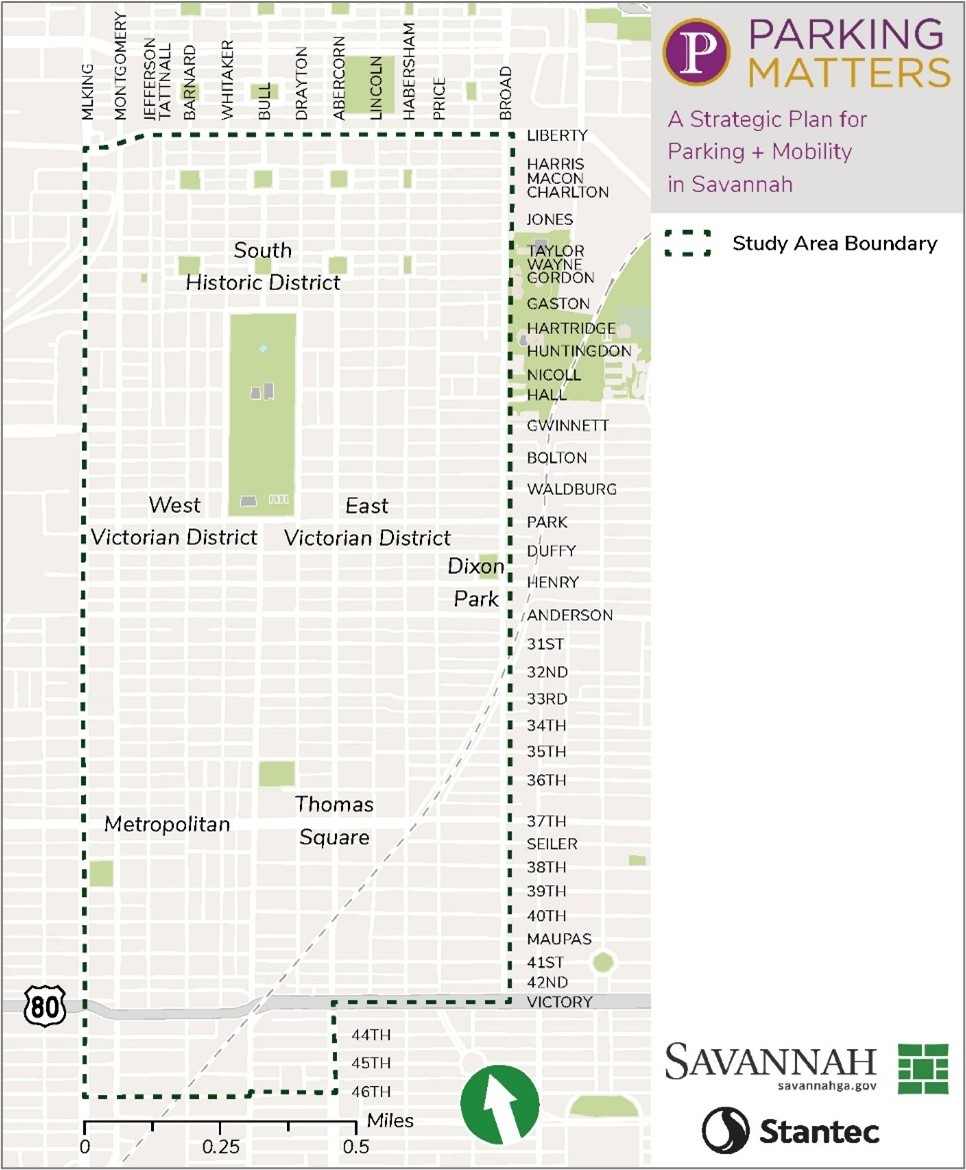
Background
In 2015, the City of Savannah launched Parking Matters: A Strategic Plan for Parking + Mobility in Savannah. This study area included Downtown Savannah to 37th Street.
This study resulted in key policy and operational changes for the city, including:
- Implementation of multi-space meters and the “ParkSavannah” app
- Streamlined routing and expansion of the DOT Shuttle
- Simplified parking rates and zones
The study provided the City with a set of tools to adjust parking issues and changes as needed, allowing a tailored approach to recognize the evolving needs of the City of Savannah. Click here to learn more about the 2015 Parking Matters study.