The Power of Archives –
Connecting Students to Living History: From St. Catherine’s to White Bluff/Coffee Bluff to Madison, Wisconsin
“How did Black communities create their own freedom after the Civil War?” That was the question pondered by 9th grade U.S. History students at LaFollette High School in Madison, Wisconsin recently.
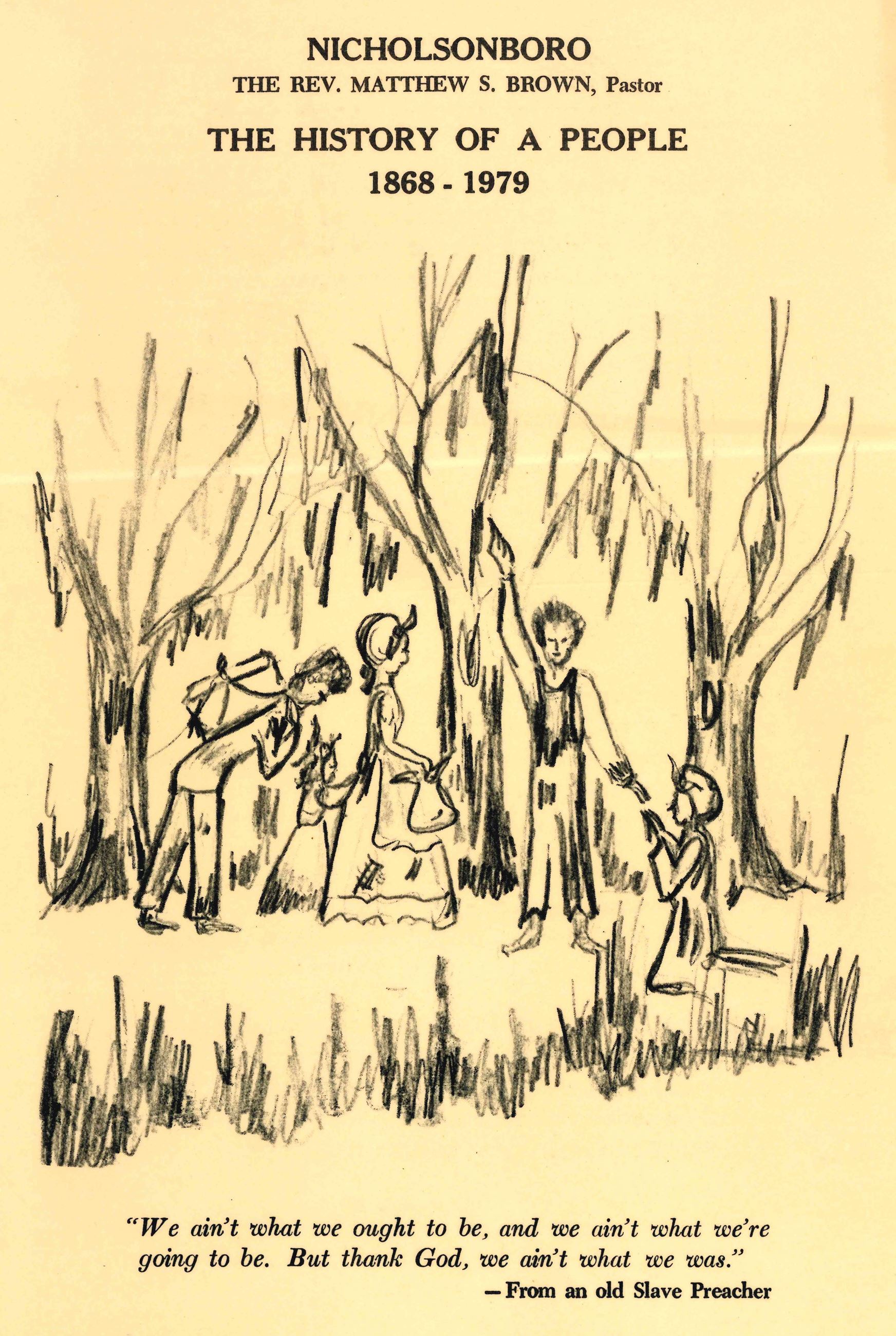
Co-teachers Luke Gangler and Nicole Reisnour helped their students explore this topic after they discussed how “Reconstruction is often taught as a hopeful moment that ultimately ‘failed,’ which can obscure the agency, leadership, and successes Black communities created even while facing violence, barriers, and pushbacks.” Gangler and Reisnour first discovered the story of Georgia’s St. Catherine’s Island through the Rethinking Schools article “40 Acres and a Mule: Role-playing what Reconstruction could have been,” by Adam Sanchez. While they felt the article did a strong job of centering Black agency for the students, it framed the story as a tragedy. As the teachers dug deeper into the history, they found “the communities built on St. Catherine’s Island didn’t simply disappear. Many people made the decision to leave rather than accept unfair sharecropping contracts and ended up forming communities in the White Bluff area.” Their research led them to the Municipal Archives’ Savannah Community Memory Project and the Voices of Savannah portal, where oral histories collected by the Archives from residents of the Coffee Bluff and White Bluff communities showed them that “the story didn’t just continue into the late 1800s, but that it is still continuing today.”
Gangler reached out to Archives staff, asking for help to connect with a community member who had personal or familial ties to this history and could speak via video conversation to the students in Wisconsin, believing that “hearing directly from someone connected to this story would be a very meaningful experience” for the students. Drawing on the partnership that grew out of the District 6 Community Archiving Event in 2023 between the Municipal Archives, Historical Nicholsonboro Baptist Church (HNBC), and The Crusader Club, the Archives connected Gangler with Ms. Kathy Middleton Thomas, a descendant of St. Catherine’s Island and the Church Historian for HNBC. With the help of Thomas, on November 21st, the LaFollette students met Deacon David Mack, Jr. and Cory Morrell to learn more about their connections to St. Catherine’s Island and the Gullah-Geechee community. The exchange helped bring history to life for these young men and women, and brought the Gullah-Geechee experience all the way to Madison, Wisconsin.
In the exchange, the students took turns asking questions to which Mack and Morrell responded. Afterwards, Gangler said, “This was an extremely valuable experience for our students. It’s telling that we ran out of time because they were asking questions right up to the end (and still had more). Students are often hesitant to ask guest speakers questions, so their level of engagement said a lot. In our debrief afterward, several students mentioned how impactful it was to realize that people alive today personally knew individuals who directly experienced the history we’ve been studying. They were also struck by the ingenuity the speakers shared about their communities, such as community members building homes for each other and using what was available (such as seafood) to create a strong community and support one another).”
As a fly on the wall during the class, Archives staff wanted to pass along the following questions and responses that were powerful moments in the conversation:
- When asked what was the most important thing that you learned from your ancestors, Mack (a descendant of St. Catherine’s Island who grew up in White Bluff) said that they pooled their resources and made champions of everyone, you believed in everyone, and everyone had a duty and pulled a load to make the community successful together. Morrell (a descendant of St. Catherine’s Island whose great grandmother migrated to Coffee Bluff) said “We build memories together.”
- One student asked if being a descendant of slaves still affects you today. Mack said yes and discussed how after property was taken away the community relied on seafood. As a child he remembers getting up and there was nothing to eat until his father returned from fishing around 10:30 and then there would be a feast of seafood. Today, the community has a new challenge as access to fishing is being reduced.
- In response to a question about how your past and your ancestors shaped you, Mack responded that they have a family legacy to protect, “our name and legacy.”
- There was a substantial discussion about artifacts that were handed down from ancestors. Mack discussed the importance of family property and homes being passed down, as well as stories and memories of hard work. Personally, he treasures his father’s trowel and level, which are symbols of his father’s trade and skill, and hard work. Morrell discussed how most families have a bible that was a way of keeping their records, such as births, marriages, and deaths. He has his great-grandmother Julia’s bible. But he stressed “our value was in each other” not in things, “we take more pride in the home, the land, and each other.”
The experience was not just an educational one for the students, but a moving one for the White Bluff/Coffee Bluff residents that participated. As Kathy Thomas related after the fact, “the experience provided a ‘Why?’ and ‘Wow!’ experience. The connection with the diverse group of students, (ironically some are from West Africa, as were those early enslaved Africans on St. Catherines Island), reinforced the ‘Why’ of the importance of collecting, sharing and preserving our stories outside of our immediate community. The ‘Wow’; we have evidence that the collaborative work that went into the onsite collection of Oral Histories and community ephemera has had far reaching impact. The accessibility of information facilitated an intergenerational multicultural connection and conversation. This encounter has provided a refreshed perspective of our Municipal Archives as a ‘living’ relevant resource not only to our community and to the City of Savannah but to the nation and beyond.”
Special thanks to the following individuals for facilitating this educational experience and contributing to this post:
- Luke Gangler
- Nicole Reisnour
- Kathy Thomas
- David Mack, Jr.
- Cory Morrell
To access the collections related to White Bluff and Coffee Bluff see: